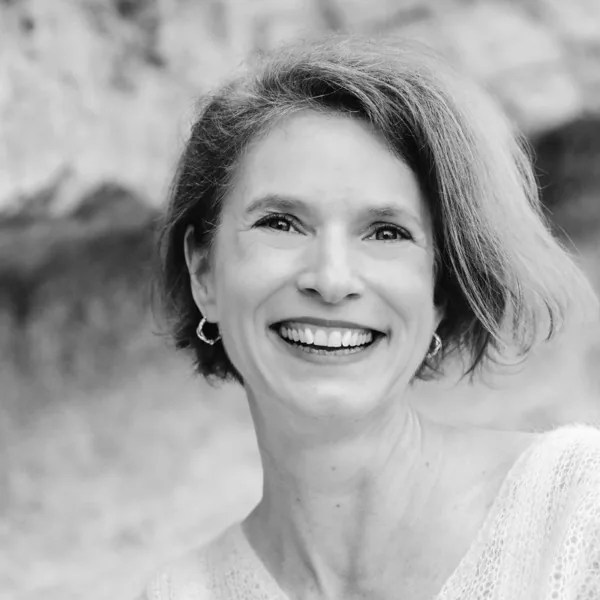
About Dr. Rachel
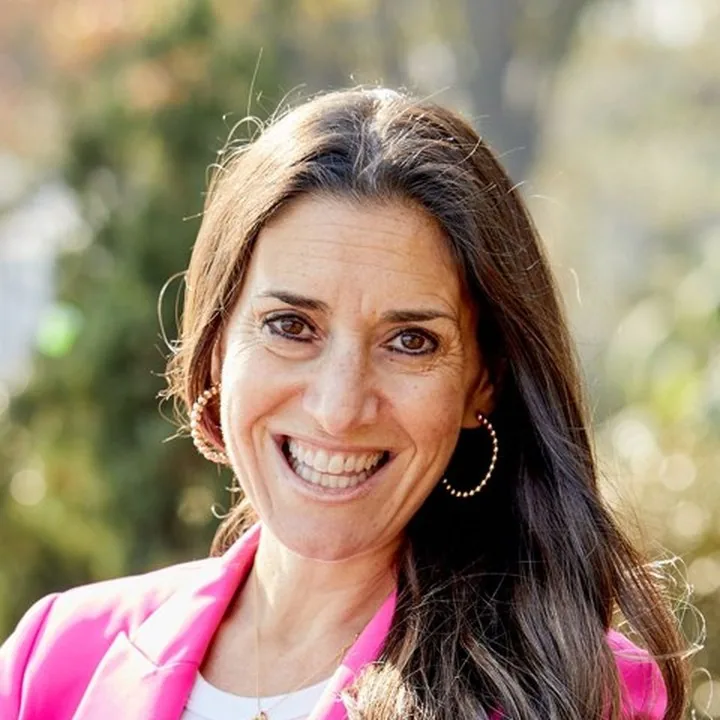
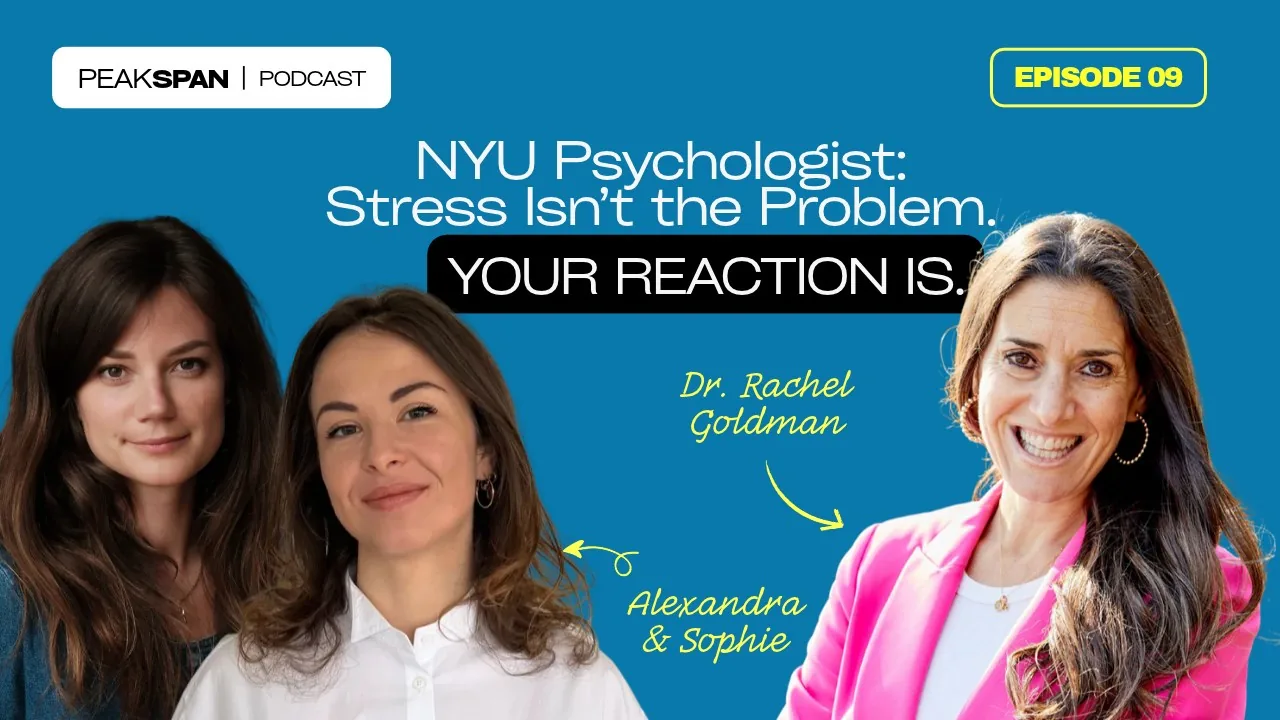
Dr. Rachel Goldman is a licensed clinical psychologist, clinical assistant professor of psychiatry at NYU Grossman School of Medicine, and author of When Life Happens. She specializes in cognitive behavioral therapy (CBT), stress management, and health behavior change, and runs a private practice in New York City. She has shared the stage with Oprah, appeared on the TODAY show and The Mel Robbins Podcast, and has been featured in The New York Times, TIME, CNN, and Women's Health.
Her approach was shaped by five and a half years in a hospital bariatric surgery program, where she saw thousands of patients and heard the same sentence again and again: "I know what I should do. But I just can't do it. What is wrong with me?" She noticed that the patients who changed weren't the ones who overhauled their lives. They were the ones who made one small tweak, came back saying "I don't know what changed, but something changed," and built confidence from there. That observation became her method: no overhauls, no perfection, just small, honest tweaks and the science behind why they work. She is also a runner and a mom of two, navigating the same challenges she helps her clients with.
What You'll Learn
Ten-year forecast. Why how you respond to stress, not the stressor itself, may predict your health a decade later.
Reaction tax. Why the pause between impulse and action is where mental fitness is built.
Data trap. When your sleep score starts deciding how you feel before you even get out of bed.
Depletion gap. Why high achievers are often the last to notice they are running on empty.
Imposter advantage. Why feeling like an imposter might actually be a good sign.
Nervous system reset. How one intentional breath can bring your stress response back toward baseline.
Key Takeaways
1
Stress isn't the problem. Your reaction is. Stress is a natural response to a threat; the body knows how to handle it and returns to baseline within about 20 minutes, she says. The problem is staying in fight-or-flight too long. Citing a Penn State study, she points out that it was the way people responded to stress, not the stressor itself, that predicted their health a decade later.
2
Respond, don't react. Reacting is the impulsive act: the tantrum, internal or external. Responding starts with a pause and a breath that physiologically lowers everything, then the question: "What do I really need right now? What's my body telling me?" "If we don't do that pause, we're actually just like children."
3
Tweak, don't change. "Change" and "should" are overwhelming words that imply something is wrong with you. A tweak (one more sip of water) feels so doable that people actually do it, and that's where confidence is built. "People think they have to overhaul their whole life in order to start seeing change."
4
Words matter: "I'm experiencing stress," not "I'm so stressed." CBT tells us thoughts, emotions, and behaviors are linked. Saying "I'm experiencing stress" separates you from it and puts you back in control. Same reason she says "full" instead of "busy." Name it to tame it, then add: "And what can I do about it now?"
5
Slowing down will feel wrong. That's the feedback loop, not a warning. Brains crave familiarity. If you've been go-go-go for years, a pause puts your brain on high alert. It can be rewired with consistency and repetition, but the discomfort is expected, not a sign to stop.
6
Data is only useful if you use it, not if it uses you. Clients feel fine until the scale gives them a number; you think you slept well until your ring says otherwise. "Two minutes ago, maybe you weren't tired... until the data told you that you were." She wears a Garmin to run and checks nothing but mileage. "We actually know ourselves best."
7
Sleeping in won't cure burnout. Depleted is not the same as tired. High-functioning type A women are prone to burnout, she says, and a weekend of nothing won't fix it. What helps is the hardest thing for exactly those people: small pauses integrated into the day, every day. Do that consistently and "in a few days you're gonna feel different."
8
When life gets busy, self-care is the first thing to go, and the last thing you should drop. Her definition of self-care is anything you do for yourself: eating, walking, breathing, sleeping. Shrink it, don't skip it: a 10-minute walk instead of 20. Nobody has ever said "I was so stressed, I didn't brush my teeth." Make the basics that automatic.
9
Imposter syndrome is information, not a verdict. Her graduate-school professor's line: "The day that you don't have imposter syndrome is the day that you should retire." Treat it as good stress (eustress) that makes you prepare more. "If you were asked, you belong there."
10
Build a toolbox of three, and one should be internal. One tool may not work, one may not be available. At least one should need nothing and nobody (for her: the breath). Hers are movement, breathing, and talking it through. Yours have to be things you'll actually do.
11
Life happening isn't the interruption to the plan. It is the plan. Controlling every aspect makes you more stressed and more disappointed. Accept what's out of your control, then focus on what's in it: "There's always going to be things out of our control, and there's always things in my control." Start with a low-stakes exposure: let someone else put the dishes away.
"It was not the stressor itself, but it was the way that we respond to stress that actually predicts people's health a decade later."
"Sleeping in one day is not going to cure burnout. A weekend of doing nothing is not going to cure the burnout."
"With so much data and optimization out there, what people are forgetting is that we actually know ourselves best."
Disclaimers
Medical disclaimer. The information in this episode is for educational purposes only and is not medical advice, diagnosis, or treatment. Podcasts, social media, and books are not therapy or a substitute for professional care. Always consult a qualified healthcare professional before making decisions about your health.
Statistics and claims. Figures, research findings, and outcomes quoted are as stated by the guest in conversation and have not been independently verified by Peakspan.