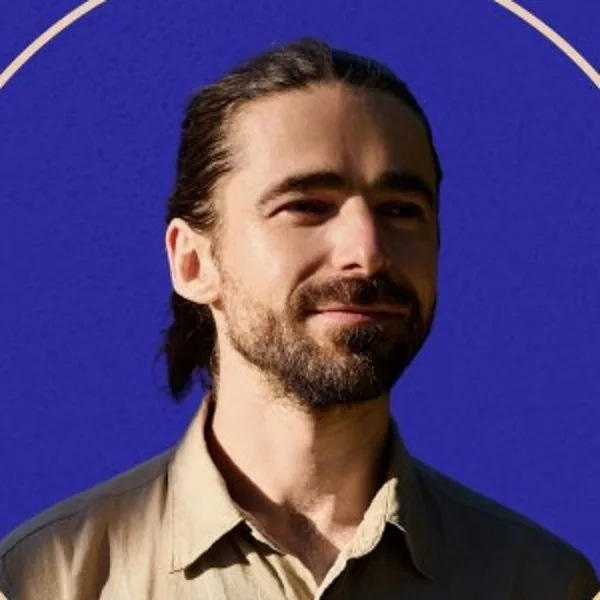
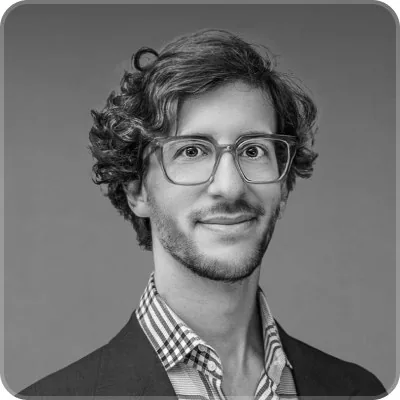
Jordan Weiss, PhD

Guest Profile

NYU Longevity Scientist: Healthspan, Lifespan, Peakspan & Why Some Age Slower

Jordan Weiss, PhD

Assistant Professor in Precision Medicine and the Optimal Aging Institute at NYU Grossman School of Medicine
PhD, University of Pennsylvania · Formerly Stanford Center on Longevity · Dog Aging Project · New York City

Healthspan Genes vs. Lifestyle Stress & Exercise Longevity Hacks Dog Aging Project Emotion Regulation

About Jordan

At 20, Jordan Weiss was working 100-hour weeks in finance and getting sick all the time. One day he realized he could keep going, but he didn't want to. He walked away and set out to understand what stress does to the body, starting at a stress and aging lab at UC San Francisco.

Today he is an assistant professor at NYU Grossman School of Medicine, in the Division of Precision Medicine and the Optimal Aging Institute, and his work comes back to one question: why do some people age well while others don't? For Jordan, that question is personal. His grandmother, a Holocaust survivor, stayed active until she died at 103. His father died at 70, in poor health.

Jordan did his PhD at the University of Pennsylvania, worked at UC Berkeley and the Stanford Center on Longevity, and has co-authored more than 100 papers with colleagues across many fields. He uses electronic health record data and AI to help close the gap between the years we live and the years we live well. He is also part of the Dog Aging Project, which is testing whether a drug can help dogs live longer, healthier lives, and he is helping build a gym in New York that tracks the health of professional athletes.

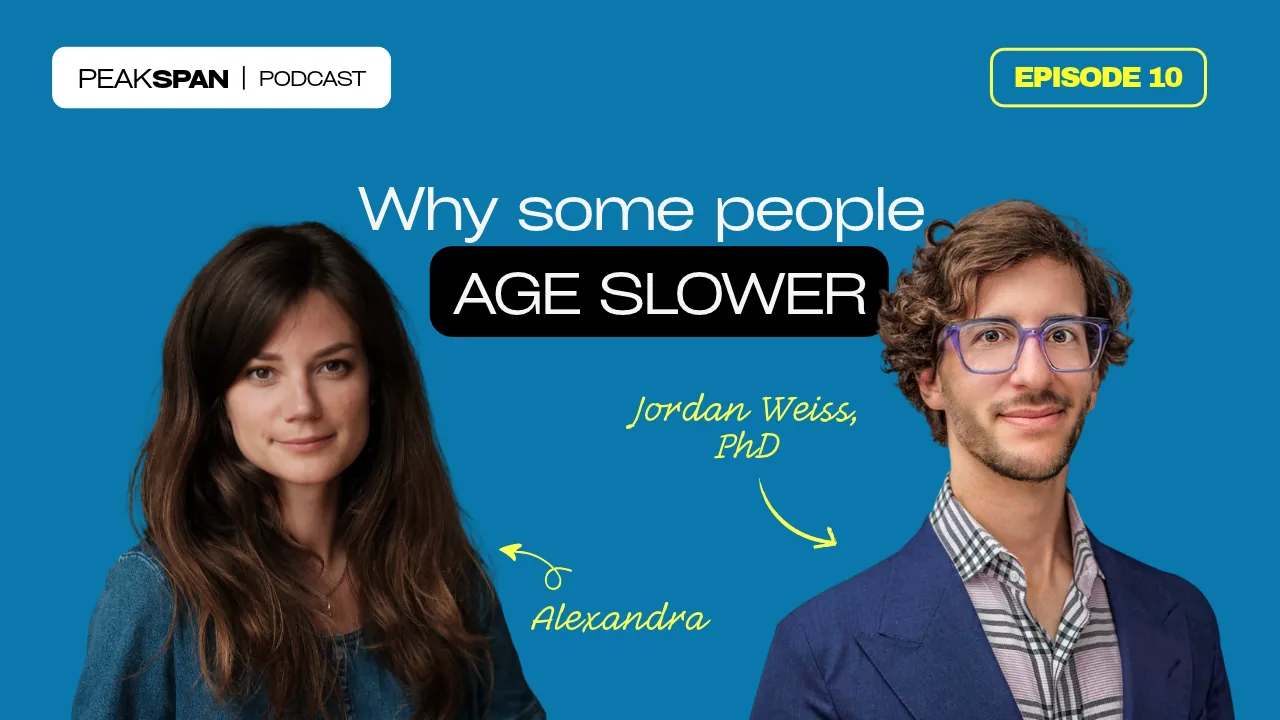
Peakspan Podcast Episode 10: NYU Longevity Scientist: Healthspan, Lifespan, Peakspan & Why Some Age Slower, with Jordan Weiss, PhD
EPISODE 10 Listen to the full episode

What You'll Learn

The 125 question. Why most people stop wanting to live to 125 once you add one honest detail.
Same genes, 33 years apart. What a grandmother at 103 and a father at 70 reveal about genes versus lifestyle.
Good stress. How exercise works as a short dose of stress that builds resilience.
Evidence gap. Why hyperbaric chambers, peptides, and red light therapy might still be waiting for their science.
Identity shift. Why "I am an exerciser" beats the perfect plan you never follow.
Underrated skill. Why emotion regulation may matter more for aging well than anything you can inject.

Key Takeaways

1
Living longer is the wrong question. Ask a room who wants to live to 125 and most hands go up. Add 25 final years in poor health and many go down. Add running out of money and almost none are left. The better question, Jordan says, is how many years we can live the lives we want, in good health.
2
The aim is to push illness to the very end. Many people spend their last 10, 20 or even 30 years with a physical, functional or cognitive limitation. The goal is disease that starts in your 90s, close to the end, instead of in your 60s with 30 limited years after it.
3
Where and who you are changes how long you live. In the US, women live about five years longer than men, and Hawaii is about eight years ahead of West Virginia. Jordan attributes much of the racial gap to social and historical differences, such as access to care, and part of the regional gap to who chooses to live where.
4
Genes count for about half. The rest is yours and chance. A recent study puts the genetic share of lifespan at around 50%. His grandmother and father shared genes and died 33 years apart in age. "You can do everything right and die at sixty, and you can do everything wrong and make it to a hundred and ten."
5
Exercise trains your stress response. Physical effort mimics what stress does in the body, in a short dose. When stress then shows up outside the gym, a disagreement or someone cutting you off in traffic, the body is better prepared. For Jordan, that is good stress: it keeps the body alert and builds resilience.
6
Most longevity hacks are still waiting for their science. Peptides, hyperbaric oxygen and red light therapy may turn out to work. Today the evidence in healthy adults is missing. His objection is to using them in place of what has been studied for decades: exercise, diet, socializing, not smoking, stress management, sleep and cardiovascular health.
7
Consistency at 60 to 70% beats two weeks at 100%. People start perfect, last two weeks and go back to their old routine. Fit the habit into your life, stack it onto things you already do, and move from "I have to exercise" to "I am an exerciser".
8
We have enough data. We need actions. Jordan thinks health technology keeps handing people more numbers and more responsibility. Most people do not want to be the CEO of their own health; they want someone they trust to tell them what to do next.
9
Emotion regulation is underrated. The stories we tell ourselves matter, and so does being able to sit with an emotion you would rather not feel. Jordan says he is one of the people who sometimes feel shame about a negative emotion. His tools are plain: meditation and breath work. "If you really don't have time in your day to take three minutes to breathe, then that means you really need it."
"Everyone's trying to find something to inject. But in reality, something like emotion regulation goes a very long way."
"We don't really need more data, we need more actionability."
"When I'm at my peak, I just feel present."

Episode Chapters

03:57The 125 Question: Lifespan, Healthspan and Peakspan▾
  • The show of hands Jordan opens his talks with, and where he loses the room.
  • Closing the gap between years alive and years in good health.
  • Pushing the onset of disease to the very end of life.
06:20Who Lives Longer: Sex, Race and Place▾
  • US life expectancy by sex, by race and ethnicity, and by state.
  • Why: biology, education, relationships, access to care, and who chooses to live where.
09:13From a Farm in Sonoma to 100-Hour Weeks in Finance▾
  • Up at 5 am cleaning chicken houses, and a childhood he describes as free of stress.
  • Applying to live in a retirement community as a college student.
  • "I can, but I don't really want to": leaving finance to study cellular aging and stress at UC San Francisco.
13:03Is There Such a Thing as Good Stress?▾
  • Exercise as a short, controlled dose of the body's stress response.
  • Why that leaves you better prepared for an argument or a driver cutting you off.
14:37Team Science, and a Society That Hasn't Caught Up▾
  • What he values in academia: collaboration across fields, including a "brain age" score from radiology colleagues.
  • The Stanford Center on Longevity view: lives have gotten much longer, retirement, careers and healthcare have not adjusted.
18:17A Grandmother Who Lived to 103▾
  • A Holocaust survivor who walked every day, swam, did her own shopping and stayed social.
  • Why people who know what is good for them still do not do it.
20:18Same Genes, 33 Years Apart: Genes vs. Lifestyle▾
  • His grandmother and his father died three months apart, at 103 and 70.
  • The recent estimate that about half of lifespan is inherited, and why earlier estimates were lower.
23:19What Dogs Teach Us About Aging▾
  • Dogs share our homes, get many of our age-related diseases, and age faster.
  • What a dog does for its owner: movement, company, a reason to get up.
  • The rapamycin trial in dogs: no findings yet, first results expected in a few years.
29:03Longevity Hacks: Where the Science Hasn't Caught Up▾
  • Hyperbaric oxygen, peptides, red light: possible, not proven in healthy adults.
  • BPC-157: almost no research in humans, no rigorous large-scale clinical trials.
  • His test for any treatment: what does it claim, and how is that tied to an outcome you care about?
32:44Why Nobody Wants the Simple Answer▾
  • The AI-built optimization plan nobody follows.
  • From "I have to exercise" to "I am an exerciser".
  • Habit stacking, and 60 to 70% done consistently.
34:37Supplements, Athletes and the Limits of More Data▾
  • Where he thinks most money is wasted, and what probiotic labels leave out.
  • The gym he is helping build in New York, and what top athletes get wrong.
  • "We don't really need more data, we need more actionability."
38:23The Mental Side: Purpose, Stories and Emotions▾
  • Why a sense of purpose makes a significant difference.
  • The stories we tell ourselves, and the shame around negative emotions.
  • Sitting with emotions, and why he calls emotion regulation underrated.
40:00Moderation, Consistency and Three Minutes to Breathe▾
  • What years of self-experiments taught him: anything too extreme does not last.
  • Doing six of the ten good things beats doing three.
  • "You don't have time to sit, sit twice", and the risk of burning out on hyper-optimization.
45:43What "Peak" Means to Jordan▾
  • "When I'm at my peak, I just feel present."

Disclaimers

Medical disclaimer. The information in this episode is for educational purposes only and is not medical advice, diagnosis, or treatment. Always consult a qualified healthcare professional before making decisions about your health, including about supplements, peptides or prescription medication.

Statistics and claims. Figures are as stated by the guest in conversation. Where a study could be identified, it is linked under Research & Concepts, and the description there follows the published paper.

Personal views. Jordan speaks for himself in this episode, not on behalf of NYU.
At a Glance

79 yrs
US life expectancy at birth · CDC, 2024
~5 yrs
Women outlive men in the US · CDC, 2024
8 yrs
Gap between Hawaii and West Virginia · CDC, 2022
~50%
Of lifespan is inherited · Science, 2026

Four figures from the research Jordan cites in the episode. Sources are linked under Research & Concepts.

What Jordan Recommends

🏃
Start With What Is Proven
Exercise, diet, socializing, not smoking, stress management, sleep. Studied for decades, and ahead of any newer treatment
🪪
"I Am an Exerciser"
Turn the chore into part of who you are. Guilt and willpower run out; identity lowers the friction
👟
Habit Stacking
Running shoes by the door. Body-weight squats while you brush your teeth. Fit the habit into your life
📈
60 to 70%, Consistently
Not perfect, not optimal, and something you can keep up. That is where he sees the largest returns
❓
The Two-Question Test
What does this treatment claim to do? How is that tied to an outcome you care about? No answer, maybe skip it
🌬️
Three Minutes to Breathe
No time to sit means you should sit twice. A few minutes of meditation or breath work, no sixty-minute practice needed
🐕
Find Your Version
He is not the most social person, so his social life happens at dog meetups. Pick the form of each habit you will keep

Research & Concepts

Heritability of Human Lifespan (2026)
Shenhar and colleagues, Science. Using twin data and mathematical models to separate deaths from aging from deaths by accident or infection, the team estimates that about half of the variation in lifespan is genetic, roughly double earlier estimates.
Read the study ↗
US Life Expectancy
National Center for Health Statistics. In 2024, life expectancy at birth was 79.0 years: 81.4 for women and 76.5 for men. State tables for 2022 put Hawaii highest at 80.0 and West Virginia lowest at 72.2.
US life tables, 2024 ↗
State life expectancy, 2022 ↗
Dog Aging Project & the Rapamycin Trial (TRIAD)
A study following thousands of companion dogs across the US. TRIAD is its placebo-controlled trial of rapamycin in healthy middle-aged dogs: one year of treatment, two further years of follow-up. No results yet.
Trial design ↗
Rapamycin in Mice (2009)
Harrison and colleagues, Nature. Rapamycin, a drug that acts on mTOR, a pathway that controls cell growth, extended lifespan in mice even when treatment began late in life. There is no convincing evidence in humans yet.
Read the study ↗
BPC-157: The Evidence So Far (2025)
Vasireddi and colleagues, HSS Journal. A systematic review of 36 studies on the peptide: 35 in animals, one in humans. No clinical safety data in people.
Read the review ↗
The State of Longevity (2026)
Andreessen Horowitz survey of 500 US consumers. About half said they would pay for one app that brings their records, labs, wearable data and care together.
Read the report ↗

FAQ

Questions answered in this episode

What does Jordan Weiss say about living to 125?

When he gives a talk, he asks “how many people want to live to 125?” and most people raise their hands. When he adds spending the last 25 years in poor health, “You lose a bunch of people,” and when he adds running out of money, “you essentially lose everyone.” For him, the better question is: “For how many years can we live the lives that we actually want to live in good health”.

How does Jordan Weiss describe the role of genes versus lifestyle?

He refers to a recent study that “estimated around 50% in sort of the genetic inheritability of lifespan.” His grandmother and his father died “about three months apart, but about thirty-three years apart.” He says “the lifestyle choices that we make really impact both our health and our mortality,” and adds: “you can do everything right and die at sixty, and you can do everything wrong and make it to a hundred and ten.”

What is Jordan Weiss's view on longevity hacks such as peptides or hyperbaric chambers?

He says “as of today, we don't really have that science yet.” On BPC-157, “there's almost no research in humans” and “there are no rigorous large-scale human clinical trials.” His position: “I'm not a big fan of substituting something that doesn't have as much evidence for something that has been very well studied for decades.” His questions for any treatment: “what is this treatment or product claim to be doing? How is that tied to some outcome that you care about?”

How does Jordan Weiss suggest making healthy habits stick?

He suggests shifting “from I have to exercise to I am an exerciser,” and habit stacking, for example putting “your running shoes in front of your door.” He sees many people start at 100% and give up after a week or two. Hitting “60, 70%, not perfect, not optimal” and keeping it up consistently is, in his view, “where the greatest returns are.”

What role do emotions play in aging well, according to Jordan Weiss?

He says “emotions play a significant role. The stories we tell ourselves matter tremendously.” Some people feel shame around a negative emotion, and he adds: “I am one of those people at times.” For him, “being able to sit with the emotion and developing emotion regulation skills is underrated in the longevity space,” because “Everyone's trying to find something to inject.”

Keep listening

More episodes

All episodes →